nustar Probability in Casino Games
Mastering nustar Probability in Casino Games: Advanced Strategies for Philippine Players
Welcome to the advanced guide on understanding and leveraging probability in casino games, specifically tailored for players in the Philippines. In the exciting world of online gaming, particularly with leading platforms like nustar, grasping the underlying mathematical principles of probability is not just an academic exercise—it's a critical component of a successful and strategic approach. This article delves deep into the sophisticated aspects of probability, moving beyond basic odds to explore how experienced players can utilize statistical insights to enhance their decision-making, manage their bankroll more effectively, and ultimately, improve their long-term prospects. We will uncover the nuances of house edge, variance, and expected value across various popular casino games, providing you with actionable strategies to navigate the thrilling yet challenging landscape of online casinos. Whether you're refining your blackjack strategy, dissecting the roulette wheel, or analyzing slot machine mechanics, a solid understanding of probability is your most powerful ally.
Understanding the Fundamentals of Casino Probability
At its core, casino gaming is a series of probabilistic events. For advanced players, a superficial understanding of odds isn't enough. We need to dissect the very fabric of how probabilities are calculated and how they dictate potential outcomes. Probability is expressed as a number between 0 and 1 (or 0% and 100%), representing the likelihood of an event occurring. In casino games, these probabilities are often fixed, especially in games like roulette or craps, where the number of outcomes is finite and known. However, in games like blackjack or poker, probabilities can shift based on cards already dealt, requiring dynamic calculation and adaptation.
For instance, in European Roulette, the probability of hitting a single number is 1/37 (approximately 2.70%). While this seems straightforward, advanced players consider conditional probabilities and the law of large numbers. The law of large numbers states that as the number of trials increases, the observed frequency of an event will converge on its theoretical probability. This doesn't mean that if red has come up five times in a row, black is 'due' (a common gambler's fallacy), but rather, over thousands of spins, the distribution of red and black outcomes will approximate their true probabilities. Understanding this distinction is crucial for avoiding irrational betting patterns and maintaining a disciplined approach.
Furthermore, an advanced understanding involves recognizing independent versus dependent events. Slot machine spins are independent events; the outcome of one spin has no bearing on the next. Card games like blackjack, however, involve dependent events, where the removal of cards from the deck alters the probabilities for subsequent hands. This foundational knowledge forms the bedrock upon which all advanced casino strategies are built.
House Edge and Expected Value: Your Long-Term Outlook
The house edge is the casino's built-in advantage, expressed as a percentage of your initial bet. It's a direct consequence of the game's probabilities and payouts. For instance, in American Roulette, the house edge is around 5.26% due to the extra double zero. In European Roulette, it's about 2.70%. Understanding the house edge is paramount because it directly impacts your Expected Value (EV).
Expected Value is the average outcome of a bet if you were to make it an infinite number of times. A positive EV indicates a long-term profit, while a negative EV (which is almost always the case in casino games) indicates a long-term loss. The formula for EV is: EV = (Probability of Winning * Amount Won) - (Probability of Losing * Amount Lost). For example, if you bet ₱100 on a single number in European Roulette, your EV would be: (1/37 * ₱3500) - (36/37 * ₱100) ≈ -₱2.70. This means for every ₱100 you bet, you are expected to lose ₱2.70 in the long run.
Advanced players don't just acknowledge the house edge; they actively seek out games and variations with the lowest house edge. They also understand that certain strategic decisions can further reduce the effective house edge. For example, playing blackjack with perfect basic strategy can reduce the house edge to less than 0.5%. Recognizing these opportunities is a hallmark of sophisticated play. For more insights into optimal play, consider exploring resources on nustar online casino games.
Variance and Risk Management in Advanced Play
While Expected Value gives you the long-term average, variance (or volatility) describes the short-term fluctuations in your bankroll. A game with high variance will see bigger swings, both up and down, while a low-variance game will have more consistent, smaller fluctuations. Understanding variance is crucial for bankroll management, especially for advanced players who aim for sustained engagement rather than single big wins.
For example, slot machines typically have very high variance, meaning you can go through long losing streaks interspersed with occasional large wins. Blackjack, when played with basic strategy, has relatively low variance. Poker, depending on the style of play, can range from moderate to high variance.
Advanced risk management involves aligning your bankroll with the variance of the games you play. A larger bankroll is required for high-variance games to withstand the inevitable downswings. Players also use strategies like setting win/loss limits, diversifying their play across different game types, and avoiding tilt (emotional decision-making) to mitigate the effects of variance. A disciplined approach to managing risk, informed by an understanding of variance, is what separates casual players from serious strategists. To practice your risk management skills, you can register and login to nustar.
Game-Specific Probability Analysis and Strategies
Different casino games present unique probabilistic challenges and opportunities. Advanced players specialize in understanding these nuances:
- Blackjack: Card counting (though difficult in online environments due to frequent shuffling) is the ultimate probability-based strategy. However, even without counting, mastering basic strategy is about optimizing decisions based on the probability of the dealer busting and the probability of improving your hand. For example, knowing when to hit, stand, double down, or split is a direct application of probability.
- Poker (e.g., Texas Hold'em): Poker is a game of incomplete information, where probability plays a massive role. Players calculate 'pot odds' (the ratio of the money in the pot to the cost of calling a bet) and 'implied odds' (potential future winnings) to determine if a call is mathematically sound. They also estimate 'outs' (cards that can improve their hand) and calculate the probability of hitting those outs. This constant calculation of probabilities, combined with reading opponents, defines advanced poker play.
- Roulette: While seemingly random, advanced roulette play involves understanding the distribution of numbers and the true odds. While no strategy can overcome the house edge, players might employ betting systems (like the Martingale, though with caution due to its inherent risks) or focus on outside bets with higher probabilities but lower payouts to manage variance.
- Baccarat: This game has one of the lowest house edges, especially on the Banker bet (around 1.06%). Advanced players understand these fixed probabilities and often stick to the Banker bet, avoiding the Tie bet due to its significantly higher house edge.
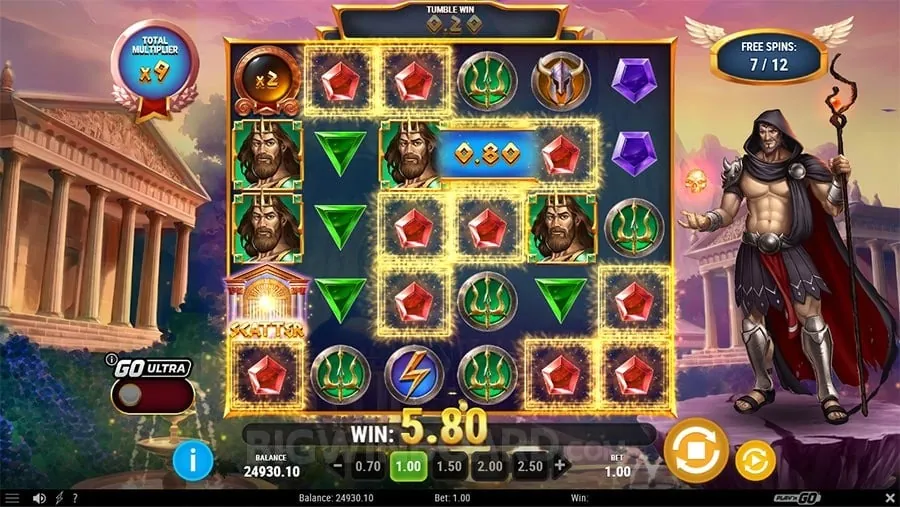
- Slots: While individual slot spins are random and independent, advanced players analyze Return to Player (RTP) percentages, which indicate the theoretical percentage of all wagered money a slot machine will pay back to players over time. Higher RTP slots (e.g., 96% and above) offer better long-term prospects.
For a comprehensive selection of games to apply these strategies, visit nustar casino Philippines.
Common Misconceptions and Cognitive Biases
Even advanced players can fall prey to common cognitive biases that distort their perception of probability. Recognizing and actively combating these biases is crucial for maintaining a rational approach:
- Gambler's Fallacy: